

A Year in the Database: 365 Days of License Plate Reader Records from an Arizona Driver
Driver says, "This is not about being anti-police. It is about protecting the basic expectations of privacy and freedom that Americans should have."
754 photos.
A year of location data.
Together they form a digital record documenting the movements of one Arizona driver captured by a network of automated license plate readers.
And if lawmakers change the rules, records like these could become harder for the public to access.
A Year Under the Cameras: Visualizing 365 Days of License Plate Reader Records
After discovering license plate reader systems had captured images of my own vehicle, I encouraged other Arizona residents to request their own records through public records laws. One Arizona resident, Pam Kirby, did just that.
Kirby shared the resulting documents with me for analysis. Documents reviewed appear to originate from the Town of Paradise Valley, Arizona. The materials provided include what is reported to be the town’s records retention policy for law enforcement records.
According to the documents, certain license plate reader (LPR) logs may be retained under Arizona’s law enforcement records schedule for up to one year after the calendar year in which they were created.
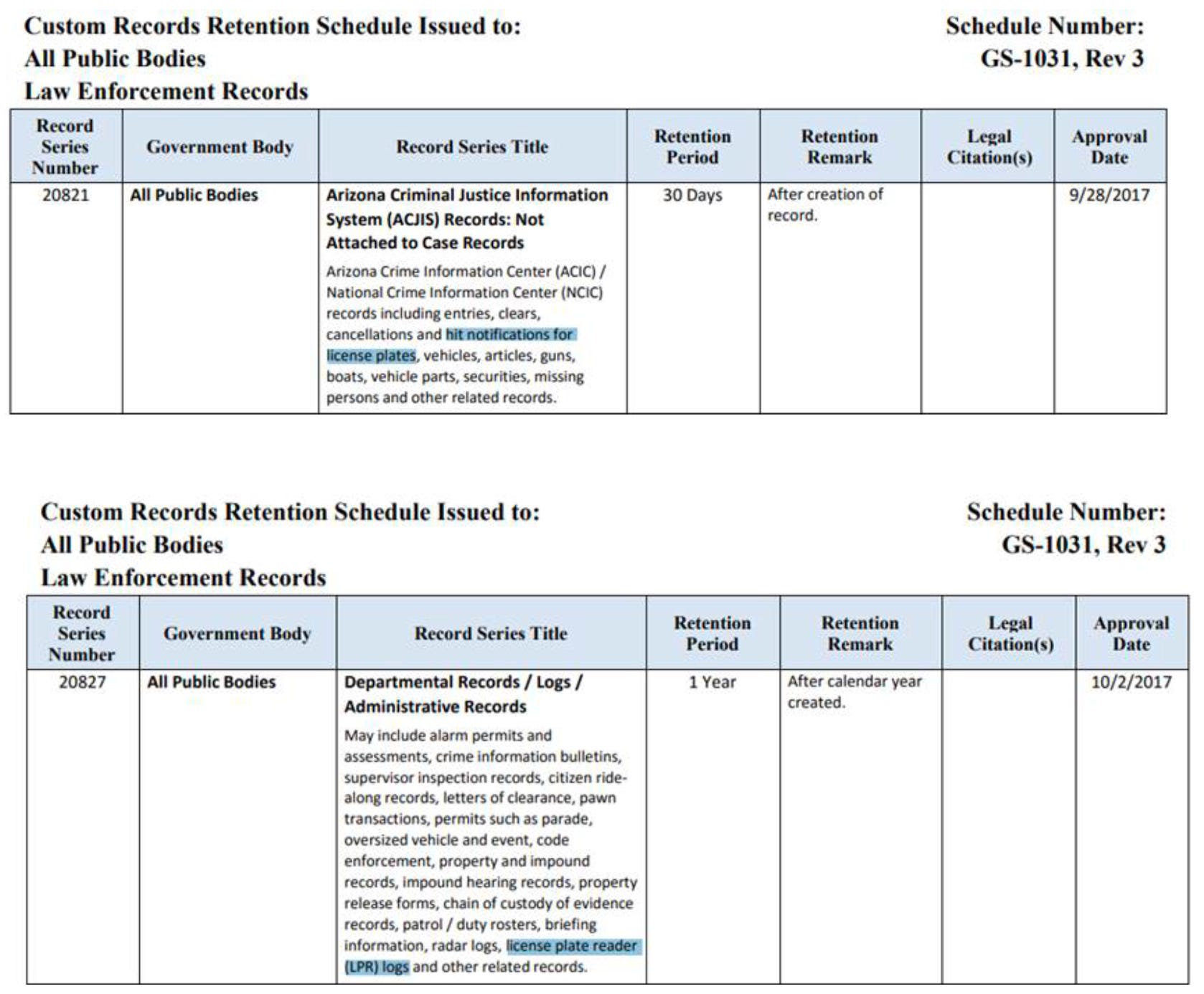
While the records provided reference the Arizona State Archives General Records Retention Schedule GS-1031, Rev. 3, a review of the most recent publicly available version, GS-1031, Rev. 5, shows the same retention classification for license plate reader (LPR) logs under Departmental Records / Logs / Administrative Records, which lists a retention period of one year after the calendar year created. The current schedule can be found here.
The Data
The following datasets highlight a key issue in the current debate over SB1111, the Arizona license plate reader bill, which leaves data retention policies largely to individual agencies and municipalities.
Across Arizona, my reporting has identified local retention policies ranging from approximately two weeks to one year depending on the jurisdiction.
When I requested records associated with my own license plates, the materials provided included 185 days of stored detections.
For this report, I conducted a full visual and manual review of every document provided. I also used AI-assisted tools to independently verify counts, dates, and patterns within the dataset. The results were consistent with my manual review.
Disclosure and Source Disclaimer
Based on the format, labeling, and system identifiers contained within the files, the documents appear to be exports generated from automated license plate reader (ALPR) systems used by the Town of Paradise Valley. I was not the original requester of the records and cannot independently verify whether the documents represent the complete set of records maintained by the agency.
Through email, the Town of Paradise Valley confirmed receipt of my request for comment on March 5, 2026. As of publication, a response was not received.
The Paradise Valley Police Department reportedly installed fixed license plate readers in 2015 as part of a public safety initiative. LINK
Those systems compare captured license plates against state and national law-enforcement databases (ACIC / NCIC) and alert officers when a match occurs. “If a match is identified, police dispatch and active patrol cars will be alerted and further action will follow. Officers review the LPR information prior to stopping the motorist.” LINK
The materials reviewed for this report include two datasets: one associated with the Motorola Solutions VehicleManager platform and another associated with the Flock Safety ALPR system.
While the combined datasets contain more than 700 images, that total does not necessarily represent 700 separate vehicle passes. Some detections may reflect the same event captured by multiple camera systems operating in the same area.
Automated license plate reader systems capture still images of license plates and vehicles as they pass fixed camera locations. They do not record continuous video, and the records reviewed do not appear to identify the driver of a vehicle. Each entry in the dataset represents a single detection event at a specific time and location and should not be interpreted as continuous tracking between camera sites.
DATASET 1
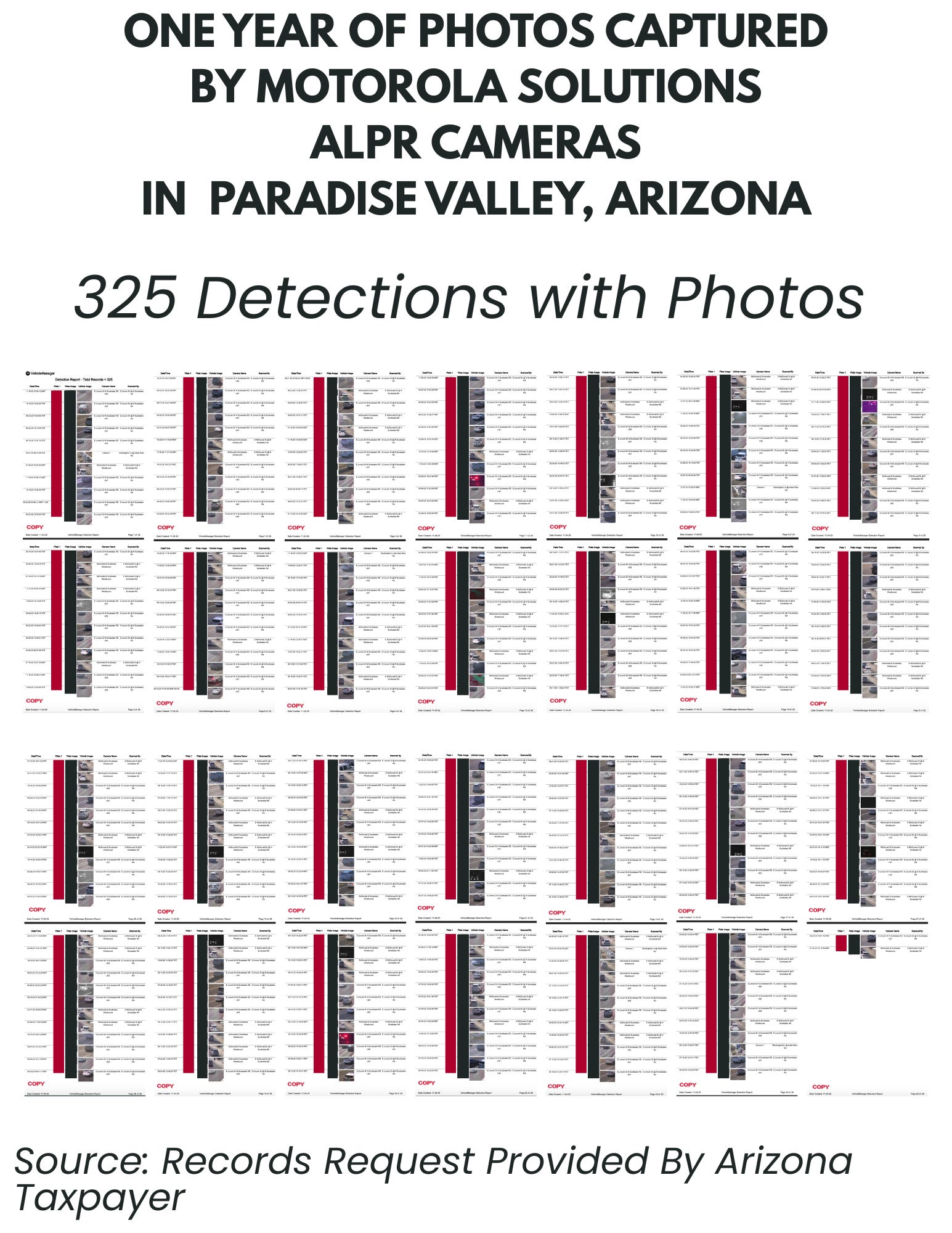
The first dataset appears to originate from Motorola Solutions’ VehicleManager platform, a system used by law enforcement agencies to manage automated license plate reader (ALPR) detections.
The records provided include a document bearing the Motorola Solutions VehicleManager logo and labeled “Detection Report – Total Records = 325.”
Based on the documents reviewed, the earliest detection in the dataset occurred on November 22, 2024, and the most recent occurred on November 18, 2025, representing nearly a full year of recorded detections of Pam Kirby’s license plates within the materials provided.
Each detection entry includes the date and time of capture, a camera identifier, and the intersection or location where the plate was detected, along with an associated image of the vehicle.
DATASET 2
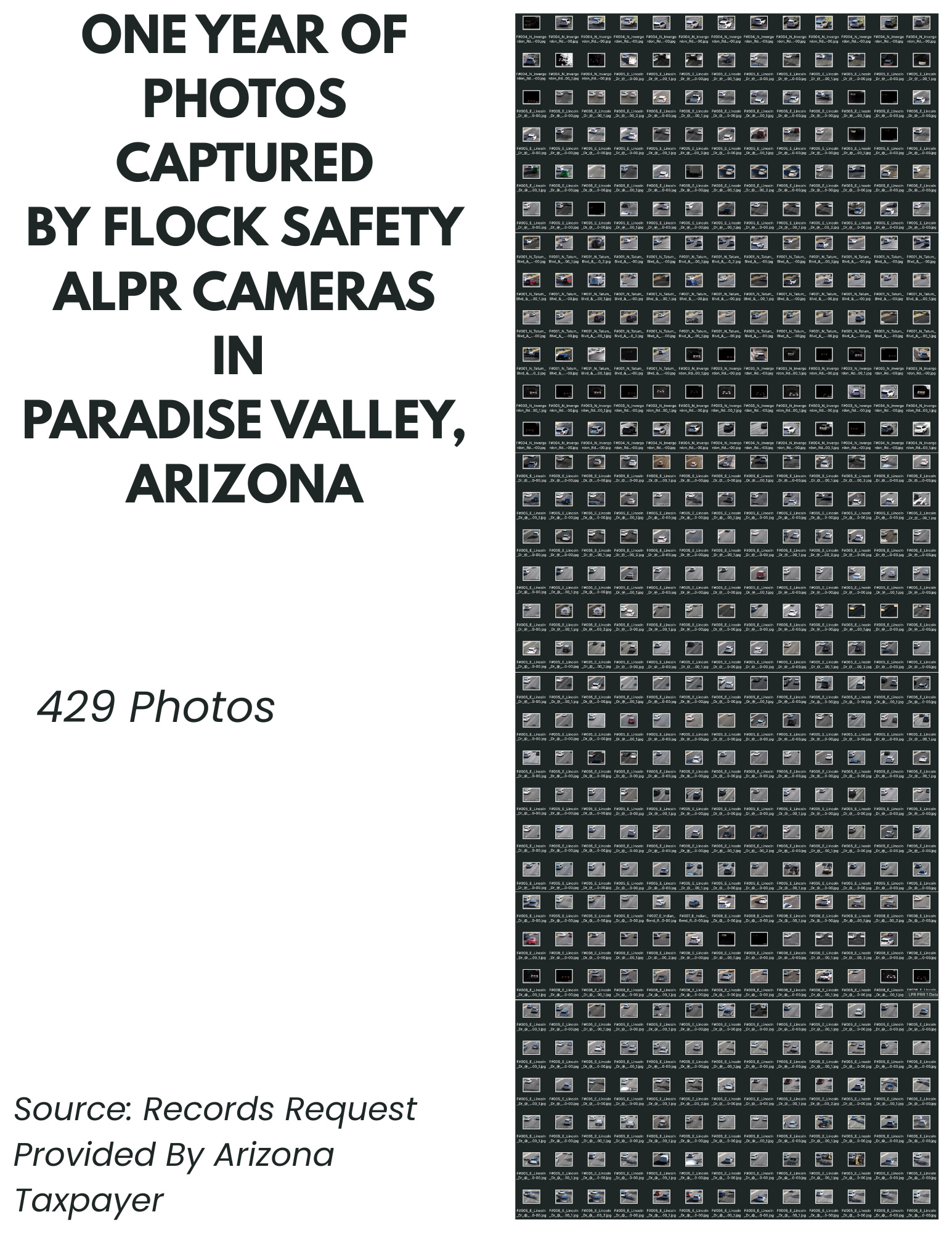
The second dataset appears to originate from the Flock Safety ALPR system, based on the “Flock” watermark visible on the image thumbnails.
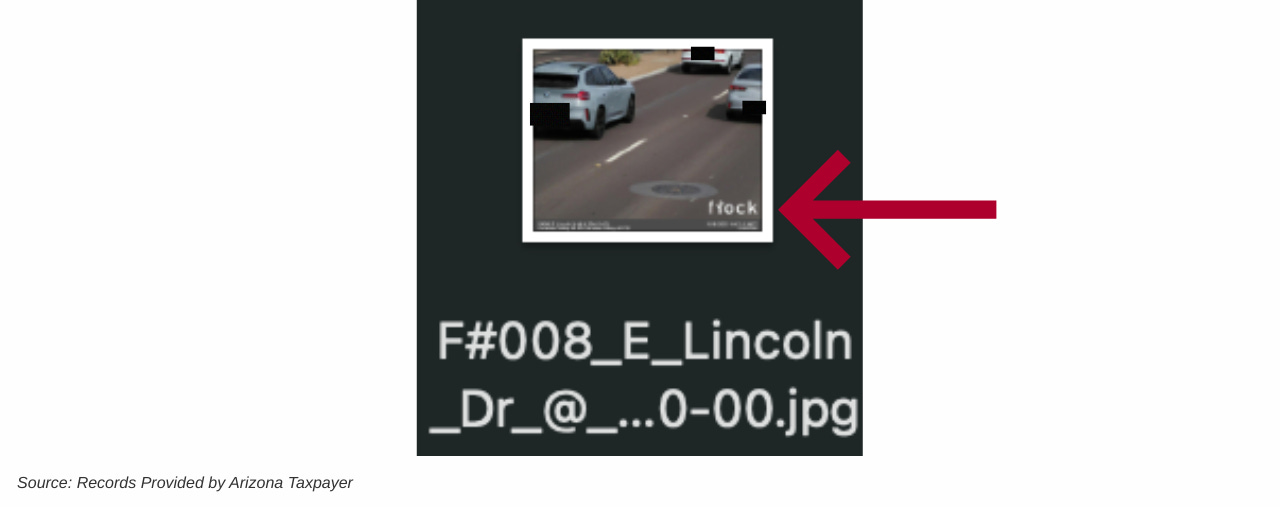
This second dataset also appears to be generated from automated license plate reader (ALPR) cameras operating in the same jurisdiction.
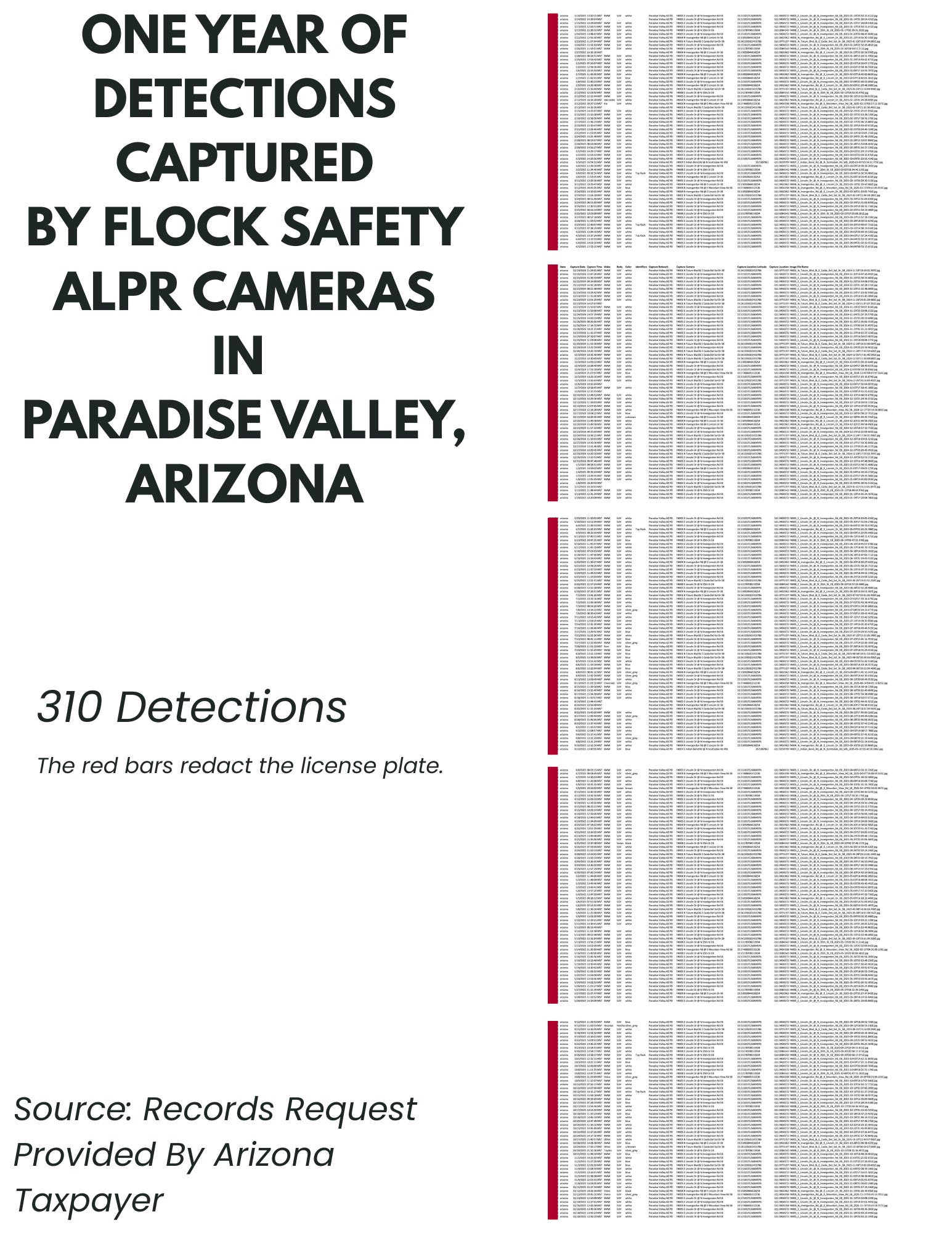
The materials provided include 310 rows of detections and 429 associated photographs.
According to the records reviewed, each entry includes fields such as the license plate number, date and time of detection, vehicle description, camera identifier, and the reported intersection or location of the detection. Many entries also include GPS coordinate data associated with the camera location.
In multiple instances, a single detection event includes more than one image, which accounts for the higher number of photographs compared with the number of detection entries.
Pattern Analysis and Visualization
During the review, several notable patterns appeared in the records. The same vehicle is sometimes labeled with different color classifications by the system’s automated vehicle recognition software — including white, silver/gray, and blue.
To better understand the scale and distribution of the detections, I generated several visualizations from the Motorola dataset using AI data analysis tools.
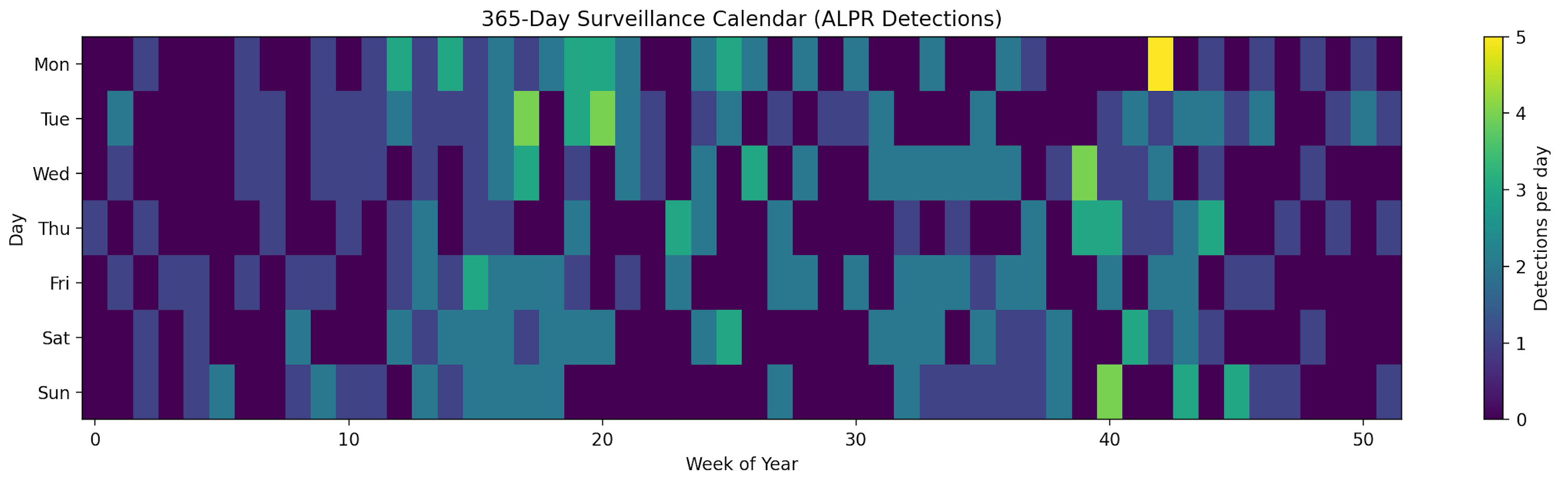
One visualization is a 365-Day Detection Calendar, which displays each day during the reporting period as a colored square. The colors correspond to the number of detections recorded on that day.
This visualization illustrates how the detections are distributed across the year and highlights periods where the license plate was recorded more frequently by the system.
Additional graphics examine the time of day associated with each detection and plot a timeline showing every individual record across the reporting period.
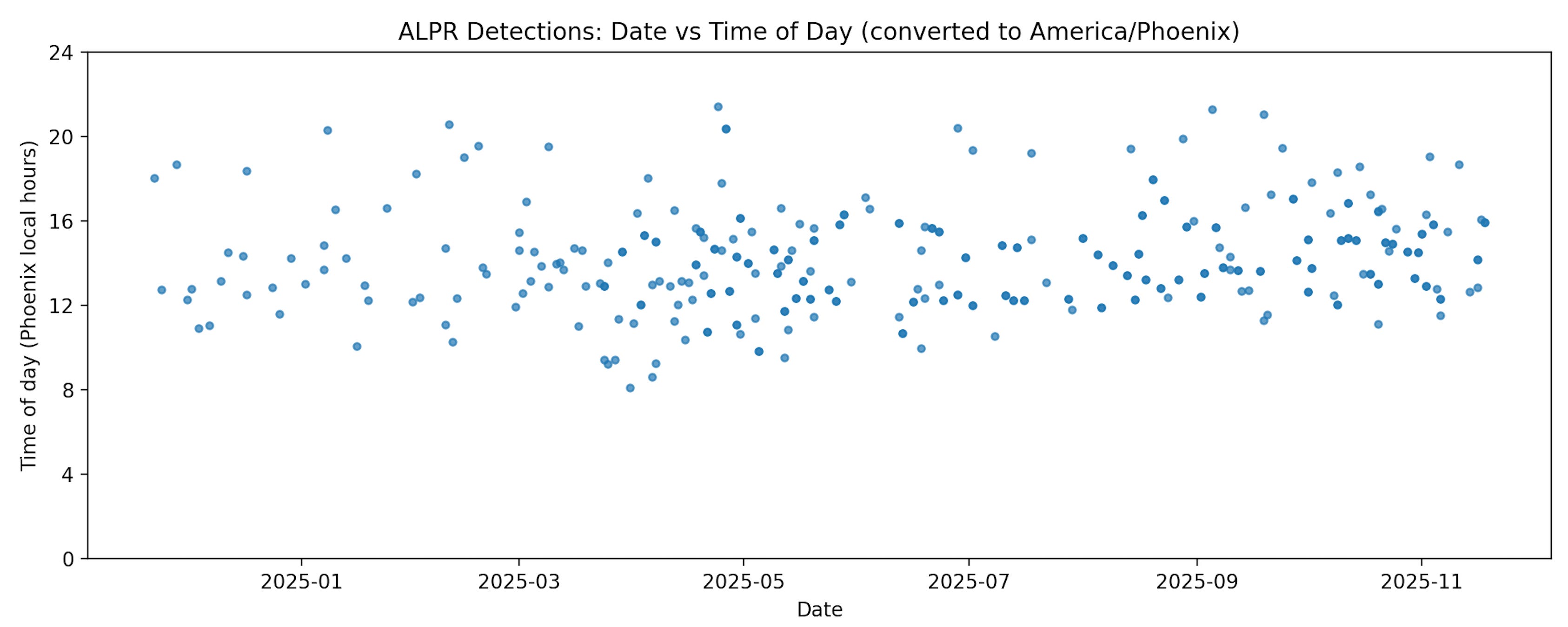
In the visualization above, each dot represents a single ALPR detection. The horizontal axis shows the date of the detection, while the vertical axis shows the local time in the Phoenix time zone when the camera recorded the vehicle.
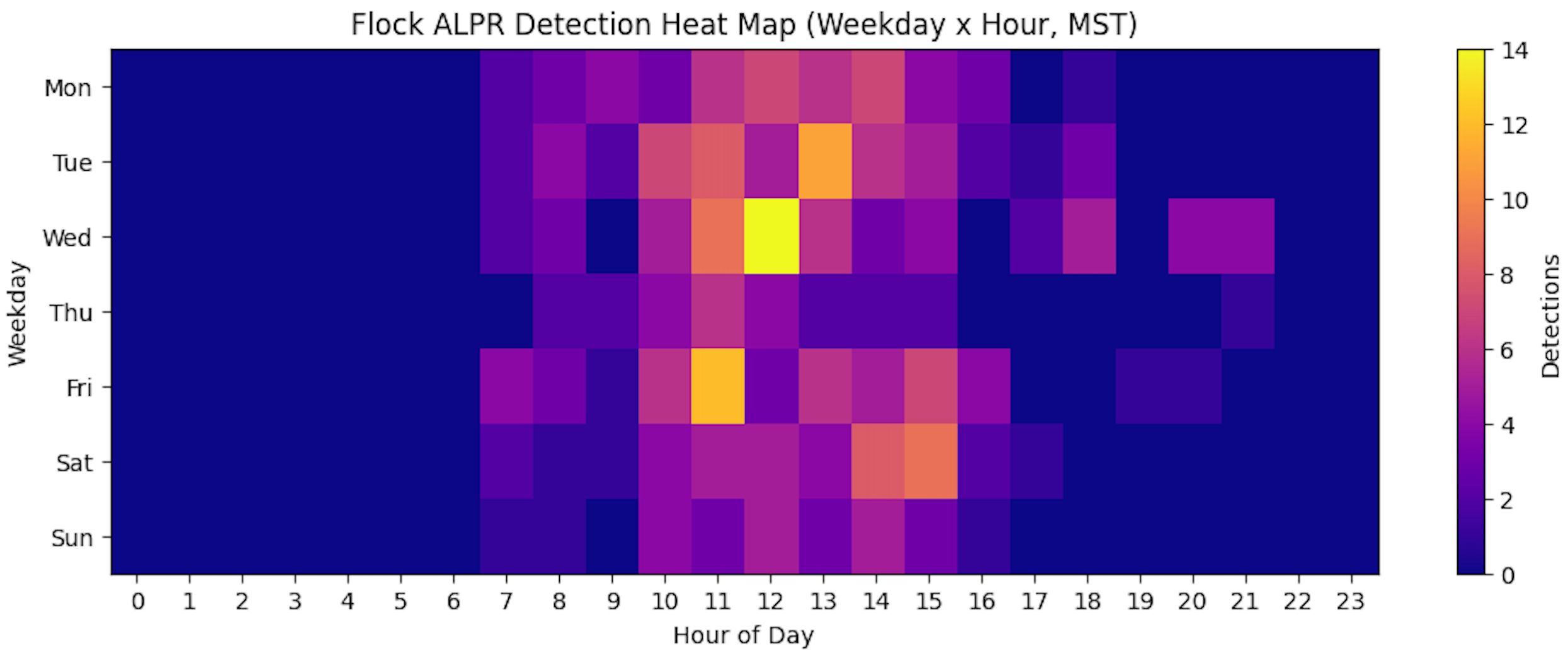
The ALPR datasets generated from the Flock records show similar patterns. A heat map of detections by weekday and hour indicates that most captures occur during daytime travel hours.
A second visualization, which maps detections across the calendar year, shows how those individual captures accumulate over time. Each colored square represents the number of detections recorded on a given day. While most days show one or two captures, some days contain multiple detections, illustrating how repeated travel through monitored intersections can generate numerous records across the course of a year.
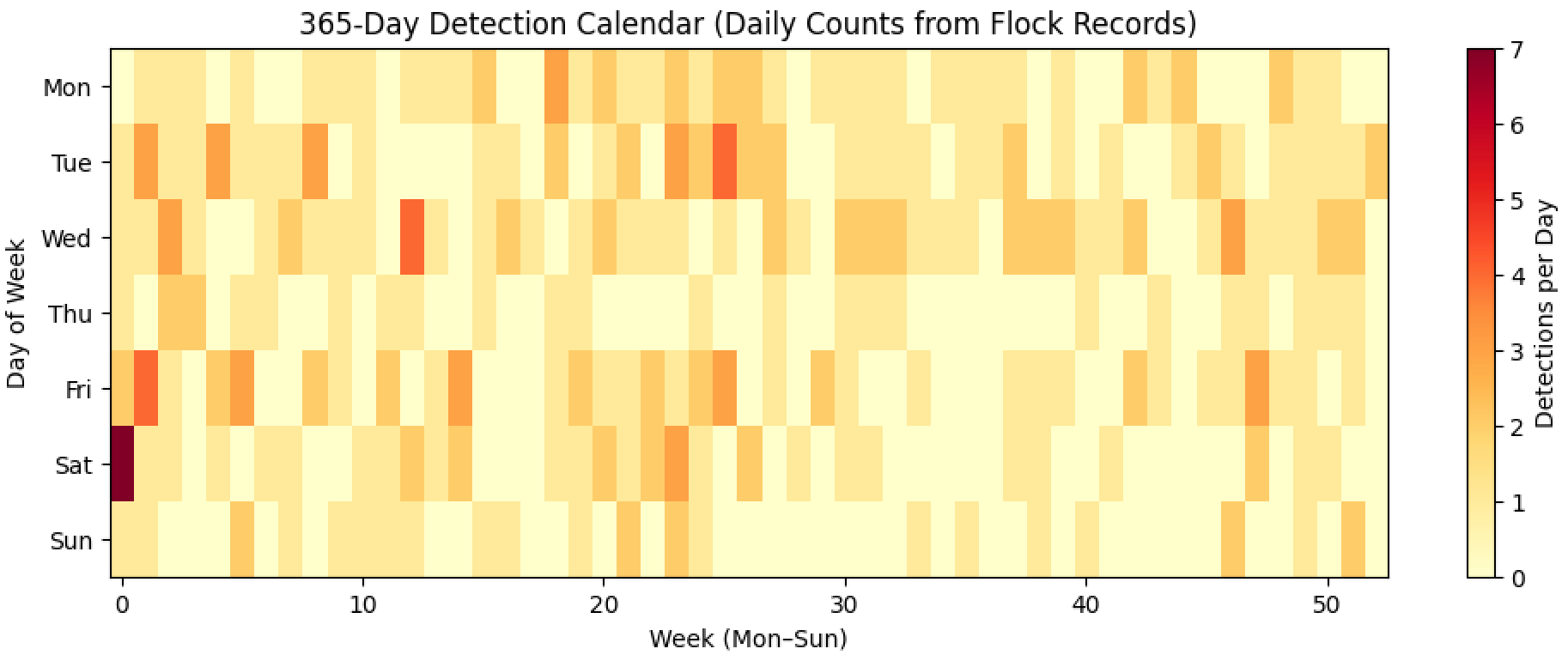
Together, these points illustrate how repeated travel through a limited number of monitored intersections can generate hundreds of recorded detections over time, even during routine daily movement.
Statement from the Arizona Resident Who Requested the Records
Pam Kirby, who submitted the public records request and provided the materials reviewed in this report, shared the following personal statement regarding the findings:
“I strongly support law enforcement and the important work they do to keep our communities safe. This is not about being anti-police. It is about protecting the basic expectations of privacy and freedom that Americans should have.
Through a public records request, I learned that the Town of Paradise Valley captured more than 700 images of my license plate in a single year using automated license plate readers. I am not suspected of any crime, yet the government created a record of my movements simply because I drove through town.
Government should not be building databases that track the movements of law-abiding citizens. Technology has advanced faster than our privacy protections, and we need a serious conversation about where the line should be.
SB1111 does not protect privacy. It licenses the abuse of it, turning every Arizona road into a checkpoint where your freedom of movement can be tracked without cause or consent.
I support tools that help police solve crimes. But those tools must respect constitutional protections and the privacy rights of everyday citizens. Public safety and personal liberty should not be mutually exclusive.”
-Pam Kirby | March 5, 2026
Learning what these systems store about your movements on Arizona roads may prove difficult. In some cities, policies limit the public’s ability to obtain their own license plate data through public records requests. A similar restriction has been proposed in Arizona’s license plate reader bill, SB1111.
But how broadly that data can be accessed by law enforcement is another question.
Many automated license plate reader systems allow agencies to share detections across regional or national networks, meaning records captured in one jurisdiction may be searchable by law enforcement agencies in another jurisdiction.
Paradise Valley Police Department is listed among dozens of Arizona agencies sharing data through the Flock Safety network, according to the Payson Police Department’s public Flock Transparency Portal.
The Policy Questions Ahead
As legislation such as SB1111, which seeks to regulate license plate reader systems, moves through the Arizona Legislature, datasets like these offer a rare look at the type of information already being collected by automated license plate reader networks.
The records reviewed for this report illustrate how camera systems log vehicle detections, how those detections are stored, and how location data tied to a single license plate can accumulate over time. When viewed together, the records demonstrate how repeated detections at monitored intersections can potentially be used to reconstruct travel patterns.
What lawmakers decide next will determine not only how these systems may be used in Arizona, but also what protections, if any, exist for the people whose license plates are recorded by them.
Arizona’s License Plate Readers Legislation: SB1111
During March 4, 2026 floor debate on Arizona SB1111, Arizona Senator Jake Hoffman delivered a sweeping constitutional defense of privacy rights, introducing a floor amendment he says would dramatically narrow the scope of AI-powered license plate reader surveillance.
Sen. Hoffman argued his amendment would limit automated license plate readers to surveilling only government vehicles on secured government property surrounded by barriers, and explicitly prohibit the cameras from observing public rights-of-way.
The second portion of the amendment would bar general public surveillance and impose civil penalties ranging from $25,000 to $250,000 per violation, per day, along with creating a private right of action allowing citizens to sue if their rights are infringed.
“The Fourth Amendment is not a suggestion. It is a command to government. You do not search people without probable cause and without a warrant,” Hoffman said on the Senate floor. “A government that watches everything controls everything.”
Sen. Hoffman warned that surveillance technology is accelerating beyond traditional oversight, describing artificial intelligence capable of analyzing voice, face, gait, and behavior at a scale no human surveillance force ever could. “This is a constitutional end run,” Hoffman stated.
“The Fourth Amendment does not disappear because the government found a loophole in the app store. Once surveillance infrastructure is built, it is never dismantled — it is only expanded. It is only repurposed.”
The amendment, introduced by Senator Jake Hoffman, ultimately failed. But the discussion surrounding the use of ALPR technology in Arizona revealed deep divisions over surveillance, privacy, and the role of citizens in shaping the legislation.
Bill sponsor Senator Kevin Payne described how the legislation was written. "This bill was written right here in this building," Payne said, explaining that he and his staff drafted the proposal by reviewing similar laws in Florida and Texas. Payne added that the amendment language had been “helped out” by Senate President Warren Petersen and law enforcement.
Notably absent from his explanation was any mention of Arizona citizens being included in the drafting process.
Senate President Warren Petersen criticized Hoffman’s amendment, suggesting it was hostile toward the bill’s sponsor. "And it appears the bill does not have — even on the underlying bill — which means that Arizona will remain status quo," Petersen said. "So what this means, since it appears this bill will be dead, is that there will be no guardrails. It will allow mass surveillance with no accountability, with no warrants, and with no Class 6 felony for misuse."
Senator Carine Werner, who previously called for a study session after hearing from Arizona residents concerned about ALPR technology, spoke about the public testimony that shaped her perspective on the issue. "I was particularly compelled by Miss Caldwell and Miss Barber," Werner said. "They raised some very good concerns and had been working with the sponsors to come up with something that would make this bill palatable and have the proper guardrails."
Those citizens — Caldwell and Barber (myself) — helped form a grassroots coalition known as “What the Flock,” which developed a series of citizen-led amendments aimed at strengthening privacy protections around license plate reader surveillance. Despite those efforts, none of the coalition’s proposed amendments were incorporated into the legislation, leaving the group effectively excluded from the final language of the bill.
Senator Mark Finchem, a co-sponsor of the legislation, expressed frustration with Hoffman’s amendment. "This looks like a political grandstand stunt and quite frankly, I think it's offensive," Finchem said, noting that no other lawmaker had introduced separate competing legislation.
Meanwhile, Senator Mitzi Epstein raised concerns about the broader implications of AI-powered surveillance systems. Epstein previously highlighted testimony from citizens who questioned the accuracy of ALPR data and the lack of mechanisms for individuals to review or correct records about themselves. "I feel it sets the stage for secret police," Epstein said during the debate.
"The bill would allow for surveillance — mass surveillance — but not the right to see what information is collected about yourself. And no way to fix it. So, in these times, we want to avoid the potential for a secret police."
In the end, Hoffman’s amendment failed on a 14–16 vote.